
The Director of Public Prosecutions (DPP) Renson Ingonga.

Director of Public Prosecutions Renson Ingonga warns Finance Bill protesters of potential arrests for defying the law.

Legal Procedures Emphasized

Ingonga stresses the constitutional right to peaceful demonstrations while urging adherence to lawful procedures. He emphasizes the importance of upholding the law during protests, emphasizing that any violation will result in arrests.

Obey the Law

In an event in Shinyalu, Kakamega, Ingonga emphasizes the importance of following legal protocols during protests. He reminds citizens of their right to peaceful assembly but cautions against illegal actions.

Recent Protests Criticized

Ingonga expresses concern over recent protests, noting a disregard for lawful procedures in various parts of the country. He highlights the need for demonstrators to follow the proper channels when exercising their rights.

Ongoing Demonstrations

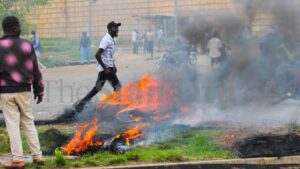
Protests against the Finance Bill continue, with demonstrators opposing proposed tax measures across the nation. Despite warnings from authorities, activists remain determined to voice their dissent peacefully.

Plans for Further Protests

Organizers announce plans for additional demonstrations, culminating in round two of Occupy Parliament on Tuesday. They aim to increase pressure on lawmakers to reconsider the controversial bill.

Debate in Parliament

MPs are set to debate the bill before voting on its passage or rejection in the coming days. The outcome of these deliberations will have significant implications for the country’s fiscal policies and public welfare.

Activist’s Response

Activist Boniface Mwangi vows to continue protests despite MPs’ approval of the Finance Bill’s Second Reading. He asserts that the fight against unjust policies will persist until meaningful change is achieved.

Upcoming Protests

Mwangi outlines a schedule for further demonstrations, including a national strike on Tuesday, June 25. He calls on all citizens to participate in the movement for social justice and economic fairness.

Demand for Justice

Protesters plan to visit IPOA offices and the Inspector General of Police to demand justice for victims. They seek accountability for any instances of police brutality or misconduct during protests.

March to State House

Demonstrators plan to march to State House on Thursday to voice dissent on the day the President is expected to sign the Bill into law. They aim to make their opposition heard directly to the highest authority in the land.

 

Leave a Reply

Your email address will not be published. Required fields are marked *

You may have missed

Building Global Bridges for The Kenya We Want At the sidelines of the 74th National Prayer Breakfast in Washington, DC, I found myself in a space that went far beyond ceremony or symbolism. It was a moment of reflection, connection, and purposeful dialogue—one that underscored how deeply interconnected our world has become, and how Kenya’s future is inseparable from global conversations on leadership, values, and sustainable development. Joining hands with global leaders such as former South Carolina Governor and former Executive Director of the United Nations World Food Programme, David Beasley, alongside Henry Kaestner, Zac Sicher, and Gavin Gramstad, I engaged in conversations that spoke to the heart of the challenges and opportunities of our time. We discussed food security, ethical investment, values-driven leadership, and the urgent need for sustainable development models that place people at the center. These were not abstract discussions. They were grounded, practical, and focused on real outcomes for real communities—especially those in developing nations like Kenya. The National Prayer Breakfast has long been a convening space where leaders from across political, cultural, and ideological divides meet in a spirit of humility and shared humanity. In that environment, the conversations I participated in reinforced a simple but powerful truth: leadership anchored in values has the capacity to transform societies. When leaders are guided not just by power or profit, but by dignity, compassion, and responsibility, they create pathways for inclusive growth and lasting peace. Food security emerged as a central theme in our discussions. In a world of unprecedented wealth and technological advancement, it remains unacceptable that millions still go to bed hungry. For Kenya, food security is not merely an agricultural issue—it is an economic, social, and moral imperative. It affects education outcomes, health indicators, political stability, and national cohesion. Conversations with leaders who have worked at the highest levels of global food systems offered valuable insights into how strategic investment, policy coherence, and regional cooperation can help nations like ours build resilient food systems that withstand climate shocks and global market disruptions. Equally important was the discussion on investment—particularly investment that is ethical, patient, and aligned with long-term development goals. Kenya has immense potential: a youthful population, a vibrant entrepreneurial spirit, and a strategic position within Africa and the global economy. However, unlocking this potential requires more than capital flows. It demands partnerships rooted in mutual respect, transparency, and shared values. Investment must serve development, not distort it. It must create jobs, transfer skills, and strengthen local institutions rather than undermine them. These engagements reminded me that diplomacy today is no longer confined to formal negotiations or official state visits. True progress often happens on the sidelines—through honest conversations, personal relationships, and the willingness to listen and learn. Building bridges is as much about trust as it is about policy. And trust is built when leaders show consistency between their words and their actions. For Kenya, and for the millions of Kenyans at home and across the Diaspora, these global engagements carry profound significance. Our Diaspora community is a vital pillar of our national development, contributing not only remittances but also knowledge, networks, and global perspectives. Engaging the world is not about looking outward at the expense of home; it is about bringing global opportunities back to uplift our people, strengthen our institutions, and expand the horizons of what is possible for the next generation. As Party Leader of Wiper and Leader of the Azimio La Umoja One Kenya Coalition, my commitment remains unwavering. I am guided by one mission: to champion The Kenya We Want. This is a vision of a nation anchored in dignity, where every citizen feels valued and protected. A nation of opportunity, where hard work is rewarded and talent can flourish regardless of background. A nation of shared prosperity, where growth is inclusive and no community is left behind. The Kenya We Want is not a slogan. It is a call to action. It requires courageous leadership that puts country before self. It calls for unity across political, ethnic, and generational lines. It demands that we confront corruption, inequality, and injustice with honesty and resolve. And it insists that development must be sustainable—economically, socially, and environmentally—so that future generations inherit not debt and division, but hope and possibility. Our future is undeniably global. The challenges we face—climate change, food insecurity, economic volatility, and conflict—do not respect borders. Neither should our solutions. Kenya must continue to engage confidently on the global stage, contributing ideas, leadership, and partnership. At the same time, we must remain firmly rooted in our values, our culture, and our people’s aspirations. The purpose, however, is clear. Global engagement is not an end in itself. It is a means to uplift our people, to create opportunities for our youth, to empower women, to support farmers, workers, and entrepreneurs, and to ensure that every Kenyan can live a life of dignity. When we engage the world with clarity of purpose, we turn dialogue into action and partnerships into progress. Moments like the National Prayer Breakfast serve as reminders that leadership is ultimately about service. It is about stewarding trust, building consensus, and leaving a legacy that extends beyond individual ambition. As Kenya navigates a complex global landscape, we must remain steadfast in our values and bold in our vision. Our future is global. Our purpose is clear. And together—at home and across the Diaspora—we will continue working toward The Kenya We Want: a nation confident in itself, respected in the world, and united in its pursuit of dignity, opportunity, and shared prosperity. 🇰🇪🌍

Social Media Auto Publish Powered By : XYZScripts.com