Kipchoge’s Journey Continues: Aiming for Los Angeles Olympics, Not Retirement

0


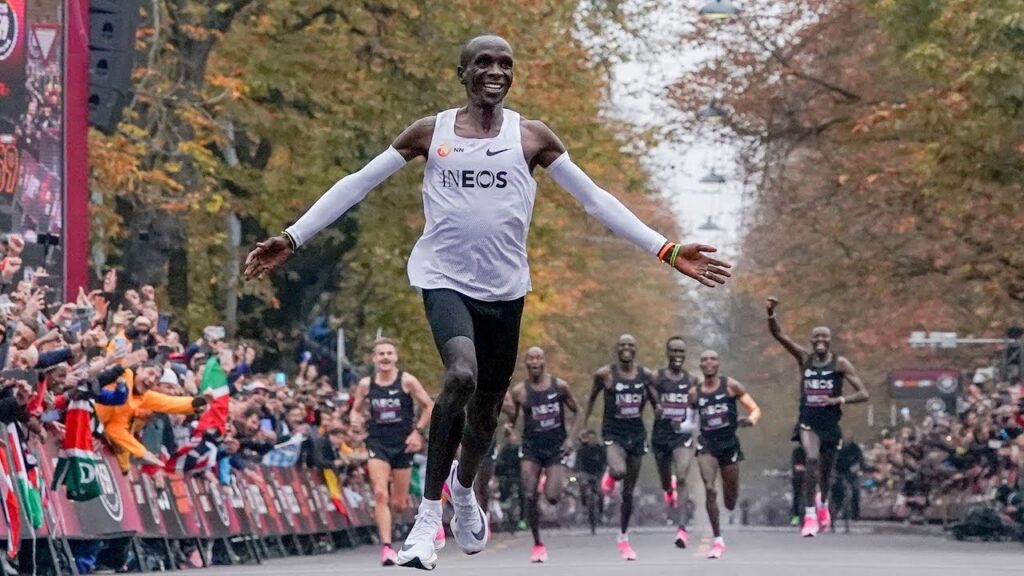
PHOTO: Kipchoge during the INEOS marathon.

Kenyan marathon legend Eliud Kipchoge has dismissed rumors about his retirement, confirming that he remains active in the sport. Despite a tough race at the Paris Olympics, Kipchoge has set his sights on the 2028 Los Angeles Olympics, where he plans to approach the marathon with a fresh mindset.

Kipchoge’s Resolve: Looking Ahead to Los Angeles 2028

Upon returning to Kenya after the Paris Olympics, Kipchoge spoke about his experiences, addressing the speculation surrounding his career. Many believed that his absence from the medal podium in Paris signaled the end of his remarkable career. However, Kipchoge clarified his intentions, stating, “I will be at the Olympics in 2028, though in a different capacity. My goal is to inspire hope and optimism, not just in my country and continent but across the entire world.”

The marathon icon, known for his resilience and unparalleled achievements, emphasized that setbacks are part of an athlete’s journey. Kipchoge, who holds the record for the fastest marathon time ever, remains determined to continue competing at the highest level. His focus is not solely on personal victories but also on motivating the next generation of athletes.

A Champion’s Perspective: More Than Just Winning

Kipchoge’s philosophy goes beyond winning medals. He believes that participation in world competitions adds value to the sport. “Fans often confuse participation with winning medals,” he explained. “While the number of participants enhances the competition, winning medals is a personal achievement for the individual athlete.”

This perspective has defined Kipchoge’s career, setting him apart from other athletes. He understands the importance of inspiring others, particularly emerging stars who aspire to break records and achieve greatness. Even though his 2019 Vienna world record of 1:59:40 remains unchallenged, Kipchoge encourages new talent to rise and push the boundaries of human potential.

The Paris Olympics: A New Chapter

The Paris Olympics marked a challenging moment in Kipchoge’s illustrious career. As the world watched, many expected him to secure at least a bronze or silver medal. However, the race did not unfold as anticipated. Kipchoge faced unexpected challenges that prevented him from finishing on the podium. Despite this, he views the experience as a new chapter in his journey rather than a conclusion.

Kipchoge’s return to Jomo Kenyatta International Airport (JKIA) was met with mixed emotions from fans and supporters. Some were concerned about his future, while others remained hopeful that the marathon legend would bounce back stronger. Kipchoge reassured everyone that he is far from finished. He intends to continue contributing to the sport in meaningful ways, whether by competing or inspiring the next generation of athletes.

Embracing Setbacks: A Key to Kipchoge’s Success

Kipchoge’s career has been defined by his ability to overcome setbacks. Throughout his journey, he has faced numerous challenges, yet he has always emerged stronger. This resilience has been a cornerstone of his success, allowing him to achieve feats that many thought were impossible.

Reflecting on his experiences, Kipchoge acknowledged that setbacks are integral to any athlete’s journey. “Success is not just about winning; it’s about how you handle challenges along the way,” he said. This mindset has helped him stay focused on his goals, even when faced with adversity. Kipchoge’s determination to continue competing and inspiring others underscores his belief that No Human is Limited.

Kipchoge’s Legacy: More Than Just Records

Eliud Kipchoge’s legacy extends beyond his world records and Olympic victories. He has become a symbol of perseverance, dedication, and the power of the human spirit. His achievements have inspired millions around the world, proving that with the right mindset, anything is possible.

Kipchoge’s impact on the sport of marathon running cannot be overstated. He has redefined what it means to be a champion, emphasizing the importance of resilience and mental strength. His famous slogan, “No Human is Limited,” encapsulates his belief that anyone can achieve greatness with the right attitude and determination.

Looking Forward: A New Era for Marathon Running

As Kipchoge prepares for the Los Angeles Olympics, the marathon world is on the brink of a new era. The sport is evolving, with new athletes emerging and pushing the limits of human endurance. Kipchoge’s presence, whether as a competitor or mentor, will continue to shape the future of marathon running.

Kipchoge remains committed to his mission of inspiring others. He recognizes the importance of allowing emerging stars to shine and break records. His involvement in the 2028 Olympics, even if not as a competitor, will undoubtedly leave a lasting impact on the sport.

Kipchoge’s Unwavering Spirit

Eliud Kipchoge’s journey is far from over. Despite the challenges he faced at the Paris Olympics, he remains focused on his goals. His determination to compete in the Los Angeles Olympics and inspire the next generation of athletes demonstrates his unwavering spirit. Kipchoge’s legacy will continue to influence the world of marathon running for years to come, proving that no setback is too great for a true champion.
Leave a Reply

Your email address will not be published. Required fields are marked *

You may have missed

Building Global Bridges for The Kenya We Want At the sidelines of the 74th National Prayer Breakfast in Washington, DC, I found myself in a space that went far beyond ceremony or symbolism. It was a moment of reflection, connection, and purposeful dialogue—one that underscored how deeply interconnected our world has become, and how Kenya’s future is inseparable from global conversations on leadership, values, and sustainable development. Joining hands with global leaders such as former South Carolina Governor and former Executive Director of the United Nations World Food Programme, David Beasley, alongside Henry Kaestner, Zac Sicher, and Gavin Gramstad, I engaged in conversations that spoke to the heart of the challenges and opportunities of our time. We discussed food security, ethical investment, values-driven leadership, and the urgent need for sustainable development models that place people at the center. These were not abstract discussions. They were grounded, practical, and focused on real outcomes for real communities—especially those in developing nations like Kenya. The National Prayer Breakfast has long been a convening space where leaders from across political, cultural, and ideological divides meet in a spirit of humility and shared humanity. In that environment, the conversations I participated in reinforced a simple but powerful truth: leadership anchored in values has the capacity to transform societies. When leaders are guided not just by power or profit, but by dignity, compassion, and responsibility, they create pathways for inclusive growth and lasting peace. Food security emerged as a central theme in our discussions. In a world of unprecedented wealth and technological advancement, it remains unacceptable that millions still go to bed hungry. For Kenya, food security is not merely an agricultural issue—it is an economic, social, and moral imperative. It affects education outcomes, health indicators, political stability, and national cohesion. Conversations with leaders who have worked at the highest levels of global food systems offered valuable insights into how strategic investment, policy coherence, and regional cooperation can help nations like ours build resilient food systems that withstand climate shocks and global market disruptions. Equally important was the discussion on investment—particularly investment that is ethical, patient, and aligned with long-term development goals. Kenya has immense potential: a youthful population, a vibrant entrepreneurial spirit, and a strategic position within Africa and the global economy. However, unlocking this potential requires more than capital flows. It demands partnerships rooted in mutual respect, transparency, and shared values. Investment must serve development, not distort it. It must create jobs, transfer skills, and strengthen local institutions rather than undermine them. These engagements reminded me that diplomacy today is no longer confined to formal negotiations or official state visits. True progress often happens on the sidelines—through honest conversations, personal relationships, and the willingness to listen and learn. Building bridges is as much about trust as it is about policy. And trust is built when leaders show consistency between their words and their actions. For Kenya, and for the millions of Kenyans at home and across the Diaspora, these global engagements carry profound significance. Our Diaspora community is a vital pillar of our national development, contributing not only remittances but also knowledge, networks, and global perspectives. Engaging the world is not about looking outward at the expense of home; it is about bringing global opportunities back to uplift our people, strengthen our institutions, and expand the horizons of what is possible for the next generation. As Party Leader of Wiper and Leader of the Azimio La Umoja One Kenya Coalition, my commitment remains unwavering. I am guided by one mission: to champion The Kenya We Want. This is a vision of a nation anchored in dignity, where every citizen feels valued and protected. A nation of opportunity, where hard work is rewarded and talent can flourish regardless of background. A nation of shared prosperity, where growth is inclusive and no community is left behind. The Kenya We Want is not a slogan. It is a call to action. It requires courageous leadership that puts country before self. It calls for unity across political, ethnic, and generational lines. It demands that we confront corruption, inequality, and injustice with honesty and resolve. And it insists that development must be sustainable—economically, socially, and environmentally—so that future generations inherit not debt and division, but hope and possibility. Our future is undeniably global. The challenges we face—climate change, food insecurity, economic volatility, and conflict—do not respect borders. Neither should our solutions. Kenya must continue to engage confidently on the global stage, contributing ideas, leadership, and partnership. At the same time, we must remain firmly rooted in our values, our culture, and our people’s aspirations. The purpose, however, is clear. Global engagement is not an end in itself. It is a means to uplift our people, to create opportunities for our youth, to empower women, to support farmers, workers, and entrepreneurs, and to ensure that every Kenyan can live a life of dignity. When we engage the world with clarity of purpose, we turn dialogue into action and partnerships into progress. Moments like the National Prayer Breakfast serve as reminders that leadership is ultimately about service. It is about stewarding trust, building consensus, and leaving a legacy that extends beyond individual ambition. As Kenya navigates a complex global landscape, we must remain steadfast in our values and bold in our vision. Our future is global. Our purpose is clear. And together—at home and across the Diaspora—we will continue working toward The Kenya We Want: a nation confident in itself, respected in the world, and united in its pursuit of dignity, opportunity, and shared prosperity. 🇰🇪🌍

Social Media Auto Publish Powered By : XYZScripts.com