a) Highlight the various determinants of supply of education (7mks) b) Briefly explain the education planning process cycle (8 mks)
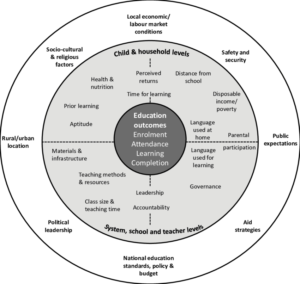
a) Determinants of Supply of Education:
The supply of education, just like any other commodity or service, is influenced by various factors. These determinants play a crucial role in shaping the quantity and quality of educational services available within a given system. Understanding these determinants is essential for policymakers, educators, and stakeholders in the education sector to effectively plan and manage educational provision. Below are some of the key determinants of the supply of education:
- Government Policies and Funding: Government policies regarding education funding, subsidies, and regulations have a significant impact on the supply of education. Public investment in education infrastructure, teacher salaries, and educational resources directly influences the availability and quality of educational services. Policies such as free or subsidized education can increase access to education, while budget cuts or austerity measures can limit the supply of educational services.
- Economic Conditions: Economic factors, such as the overall level of economic development, income distribution, and labor market conditions, affect the supply of education. Higher levels of economic development tend to be associated with greater investment in education and better educational outcomes. Income levels also influence individuals’ ability to access education, with higher-income families having more resources to invest in private schooling or supplementary education.
- Demographic Trends: Demographic factors, including population growth, age distribution, and urbanization, impact the demand for and supply of education. Growing populations, particularly in urban areas, may strain existing educational infrastructure and require expansion to accommodate the increased demand for schooling. Additionally, changes in the age distribution, such as an aging population or a youth bulge, can influence educational priorities and resource allocation.
- Technological Advances: Technological advancements play a dual role in the supply of education. On one hand, technology can enhance educational delivery methods, expand access to educational resources through online platforms and distance learning, and improve the quality of instruction. On the other hand, the adoption of new technologies may require investments in infrastructure and training, which can impact the overall supply of education.
- Cultural and Social Factors: Cultural norms, values, and societal attitudes towards education shape the demand for and supply of educational services. Societies that prioritize education and value intellectual pursuits are likely to invest more resources in educational institutions and initiatives. Additionally, social factors such as gender equality and inclusion policies influence access to education for marginalized groups, impacting the overall supply of education.
- Labor Market Demands: The demand for skilled labor and occupational trends influence the supply of education by shaping curriculum development and educational programs. Changes in labor market demands, such as the emergence of new industries or technological advancements, may require adjustments in educational offerings to ensure alignment with evolving workforce needs.
- Educational Infrastructure and Resources: The availability of physical infrastructure, such as schools, classrooms, libraries, and educational materials, is a critical determinant of the supply of education. Inadequate infrastructure or resource constraints can limit access to education and compromise the quality of instruction. Investments in infrastructure development and resource provision are essential for expanding the supply of education.
In conclusion, the supply of education is influenced by a complex interplay of economic, social, political, and technological factors. Government policies, economic conditions, demographic trends, technological advances, cultural factors, labor market demands, and educational infrastructure all play crucial roles in shaping the quantity, quality, and accessibility of educational services within a given system.
References:
- Psacharopoulos, G., & Patrinos, H. A. (2018). Returns to investment in education: A decennial review of the global literature. Education Economics, 26(5), 445-458.
- UNESCO. (2019). Education: From disruption to recovery. Global Education Monitoring Report. United Nations Educational, Scientific and Cultural Organization.
b) Education Planning Process Cycle:
The education planning process involves a systematic approach to setting goals, formulating strategies, allocating resources, implementing initiatives, and evaluating outcomes to improve educational provision and attainment. The process typically follows a cyclical pattern, comprising several key stages. Below is a brief overview of the education planning process cycle:
- Needs Assessment and Analysis: The planning process begins with a comprehensive assessment of educational needs and challenges. This involves gathering data on factors such as enrollment rates, literacy levels, infrastructure deficits, teacher availability, and curriculum gaps. Needs analysis helps identify priority areas for intervention and informs goal setting.
- Goal Setting and Objective Formulation: Based on the findings of the needs assessment, stakeholders in the education sector, including policymakers, educators, and community representatives, establish clear and measurable goals and objectives. These goals may include targets for improving access, equity, quality, relevance, and efficiency in education.
- Strategy Development and Planning: Once goals and objectives are defined, strategies and action plans are developed to achieve them. This involves identifying interventions, policies, and programs that can address the identified needs and contribute to the attainment of the established goals. Strategies may include initiatives such as curriculum reforms, teacher training programs, infrastructure development, and outreach campaigns.
- Resource Allocation and Budgeting: Adequate resources, including financial, human, and material resources, are essential for implementing education plans effectively. Budgetary allocations are made to support priority interventions and initiatives identified in the planning process. Resource allocation involves balancing competing needs and optimizing the use of available resources to maximize impact.
- Implementation and Monitoring: With plans and resources in place, the next stage involves implementing the identified strategies and initiatives. This may require collaboration among various stakeholders, including government agencies, schools, civil society organizations, and development partners. Monitoring mechanisms are established to track progress, identify challenges, and ensure accountability. Regular monitoring allows for adjustments to be made to implementation strategies based on emerging needs and feedback.
- Evaluation and Feedback: Evaluation is a critical component of the planning process, providing feedback on the effectiveness and efficiency of interventions. Evaluation methods may include assessments of student learning outcomes, surveys of stakeholders, reviews of program implementation, and cost-benefit analyses. Evaluation findings help assess the extent to which goals and objectives have been achieved and inform future planning efforts.
- Revision and Adaptation: Based on evaluation results and feedback, education plans are revised and adapted to address changing circumstances, emerging needs, and lessons learned from previous implementation cycles. This may involve updating goals, refining strategies, reallocating resources, or introducing new initiatives to better align with evolving priorities and contexts.
- Policy Review and Alignment: The final stage of the planning process involves reviewing education policies and ensuring alignment with broader development objectives and national priorities. Policy coherence is essential for sustaining progress and ensuring that education planning efforts contribute to broader socio-economic development goals.
In conclusion, the education planning process cycle is a dynamic and iterative process that involves multiple stages, from needs assessment and goal setting to implementation, monitoring, evaluation, and adaptation. By following this systematic approach, stakeholders can work collaboratively to improve educational provision and outcomes, ultimately contributing to the overall development and well-being of individuals and societies.
References:
- UNESCO. (2017). Education Sector Planning: Process and Methods. International Institute for Educational Planning.
- Colclough, C. (2000). Components of Effective Education Planning Processes. CREATE Pathways to Access Research Monograph, No. 6.