Tensions and the Final Resolution at Kondele Roundabout: Bonfires, Police Intervention, and the Battle for Civic Space
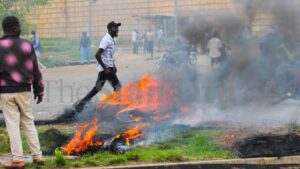
Tensions erupted near Kondele Roundabout in the early morning, a time that should have been crucial for civic engagement. A group allegedly set fire to a road leading to Koowul Square. The target of the blockade was the Linda Mwananchi Movement, a grassroots movement known for advocating for civil rights and public accountability. A series of dramatic events followed, including clashes, a swift police response, and broader reflection on the state of democracy in Kenya.
The situation began to escalate before dawn. According to witnesses, small groups began gathering in designated areas near the historic Kondele Square in Kisumu. Kondele Square holds significant political importance locally. Tires and debris were dragged onto the road, and soon after, a fire broke out, billowing thick smoke. Many observers believe the intention was clear: to create a physical and psychological barrier to prevent members and supporters of the Linda Mwananchi Movement from continuing their rallies in Ka Owuor Square.
For many, the raging fire in Kondler Square was a reminder of past political turmoil. For years, the square has been the site of protests, demonstrations, and frequent clashes between protesters and police. Its strategic location makes it a symbolic and de facto point of restraint and control, effectively managing traffic across much of the city.
As the fire spread, tensions escalated, and unease spread among travelers and local residents. Local businesses delayed opening hours, and public transport operators adjusted train routes to avoid the area. Although the lockdown was initially limited to the Kisumu district, it quickly spread throughout Kisumu, highlighting how such events can rapidly disrupt daily life.
Amid the turmoil, members of the Linda Mwananchi Movement found themselves in danger. The organization held the event at Ka Owuor Square to promote larger-scale public participation in issues such as governance, economic challenges, and social justice. Their rallies typically emphasize peaceful assembly, dialogue, and community solidarity. However, the blockade directly threatened their ability to exercise these rights.
Some supporters attempted to approach the roundabout, but the fire and some people believed to be blocking the road forced them to maintain a safe distance. Witnesses said the situation was tense but had not yet escalated into direct conflict between opposing groups.
It was at this critical moment that the police intervened. Law enforcement responded quickly, arriving at the Kondele roundabout to control the fire and the crowd. Their primary task was to extinguish the fire, which not only posed a safety hazard but also had the potential to escalate the situation.
Using firefighting equipment and working together, officers quickly extinguished the fire. Thick smoke gradually dissipated, and charred tires and debris were scattered on the road. After the fire was extinguished, police focused on restoring order and ensuring traffic safety in the area.
The police intervention de-escalated the situation. The crowds gathered around the roundabout began to disperse, and traffic gradually returned to normal. By morning, everything seemed to have returned to normal, at least on the surface. However, the tensions and questions raised by the incident remained. The target of the blockade was the Linda Mwananchi Movement, a grassroots organization known for advocating for civil rights and public accountability. The incident unfolded as a dramatic series of events, including clashes, swift police action, and a profound reflection on the state of democracy in Kenya.
Just before dawn, the situation worsened. Witnesses reported that small groups began gathering at specific locations around the Kondler Roundabout, a historically significant and often politically sensitive area in Kisumu. Tires and debris were dragged onto the road and immediately set ablaze, drying out the air. Many observers believed the intention was clear: to create a physical and psychological barrier to prevent members and supporters of the Linda Mwananchi Movement from reaching Owo Square.
For many, the current state of Condele Roundabout is worrying after witnessing past political events.
Reactions to the police action were mixed. On one hand, many praised the officers for their swift and professional handling of the potentially escalating situation. Their ability to extinguish the fire and prevent its spread was seen as crucial to maintaining peace.
On the other hand, some observers questioned the root causes of the incident. Could this have been avoided with prior intelligence or preventative measures? Were there unresolved internal political or social factors?
For the Linda Mwananchi Movement, this incident highlighted the challenges faced by civil society organizations working in conflict zones. The rights to assembly and expression are enshrined in the Kenyan constitution, but such incidents highlight potential practical limitations. Blocking roads through activities like arson not only disrupted important events but also sent a broader message about the importance of civic mobilization.
Despite the disruption, the movement remained steadfast. Organizers emphasized their commitment to working peacefully and stressed that their mission extends far beyond simply organizing an event. They urged authorities to ensure that all citizens can exercise their constitutionally guaranteed rights without fear or obstruction.
The media also played a crucial role in documenting and disseminating information about the event. Roger Otisso’s photographs provided evidence of the unfolding events, bringing what might have been considered an internal violence incident to national attention. The burning tires, the police on duty, and the aftermath of the fire all influenced public perception and narratives.
In the age of digital communication, these images can spread rapidly on social media platforms, amplifying their impact. They not only convey information but also influence public opinion, policymakers’ views, and those of other stakeholders.
Beyond the direct impact, the Kondler Roundabout incident raised important questions about the nature of public spaces in Kenya. Who controls these spaces? Who can use them? And how can we ensure that everyone can use them?
Public spaces like Kondler Roundabout and Kaour Square are more than just physical spaces—they are venues for expression, dialogue, and sometimes even conflict. These events reflect the broader context and political climate of their respective regions.
Using arson to deter others from entering is not new. In various cases, arson has been used as a means of intimidation or other forms of deterrence. However, such actions carry risks, including escalation of violence, property damage, and threats to public safety.
In this case, the timely action of the police prevented these risks from escalating into more serious consequences. However, this incident also reminds us of the delicate balance between maintaining order and protecting rights. Following this, community leaders and stakeholders called for dialogue to address internal issues that could lead to violence. They emphasized the need to create an environment where differences can be peacefully expressed, and where all groups feel heard and respected.
Education and raising public awareness are also crucial. Ensuring people understand their rights and responsibilities helps reduce the likelihood of such incidents. Similarly, fostering a culture of tolerance and respect contributes to building a more equitable society.
As Kisumu continues to develop, the management of public spaces will remain a significant challenge. The Kondela Roundabout incident highlighted both the city’s vulnerabilities and strengths. Despite the potential for tension, the ability of institutions and communities to respond effectively was evident.
Ultimately, the Kondela Roundabout incident is a microcosm of the larger changes taking place in Kenyan society. These events demonstrate the interplay between civil society, public spaces, and law enforcement, and the relationships that bind them together. While the main conflict has been quelled and peace restored, the resulting dialogue continues—regarding rights, responsibilities, and democratic participation.
The courage shown by the authorities and the community is encouraging. However, sustained efforts are needed to ensure such incidents decrease and to keep public spaces open, safe, and inclusive.