In recent months, Nairobi Senator and Orange Democratic Movement (ODM) Secretary-General Hon. Edwin Sifuna has emerged as a central figure in an increasingly visible political rift within the party. Alongside a group of ODM legislators and officials often branded as “rebels,” Sifuna’s public positions have reignited debate over party democracy, transparency, and the true state of the Memorandum of Understanding (MoU) signed between President William Ruto and the late former Prime Minister Raila Odinga in March 2025.
While tensions around the MoU have simmered for some time, it was Sifuna’s recent interview on Citizen TV that brought these disagreements sharply into the public spotlight. The backlash that followed—largely driven by coordinated online attacks and political name-calling—has raised fundamental questions about how rapidly political loyalties shift in Kenyan politics, and how dissenting voices are treated within major political parties.
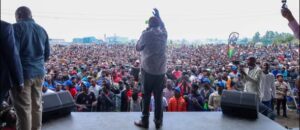
At the heart of the controversy is Sifuna’s insistence on asking uncomfortable but necessary questions—questions that many ordinary ODM supporters have quietly been asking themselves. Chief among them is the issue of money: who is funding the increasingly elaborate ODM-linked public events branded under the “Linda Ground” banner?
During the televised interview, Sifuna disclosed that the ODM Party itself has not spent any money on the costly campaigns, conventions, and rallies that have been witnessed across the country. These events—characterized by helicopter transport, massive tents, branded T-shirts and caps, and well-orchestrated mobilization—run into millions of shillings. As a signatory to the ODM party accounts, Sifuna questioned the source of these funds, prompting a fierce backlash from within party ranks.
Instead of receiving answers, he was subjected to insults and accusations of disloyalty. Yet the questions remain unresolved: Are governors funding these activities? Are Members of Parliament using Constituency Development Fund (CDF) resources? Is there a mysterious philanthropist bankrolling ODM activities without the knowledge of the party’s Secretary-General? And if so, what exactly does this benefactor stand to gain?
For critics of Sifuna, these questions are seen as undermining party unity. For his supporters, however, they are the essence of accountability. If those who know the answers exist, why not simply provide them?
The broader political context deepens the controversy. The Ruto–Raila MoU was intended to stabilize the country following widespread unrest, including the Gen-Z-led protests that shook the nation. President Ruto himself publicly acknowledged that Raila Odinga played a critical role in “steadying the ship” at a moment when Kenya appeared to be heading toward political and economic turmoil.
However, as the MoU approaches its expiry—with less than 30 days remaining—there is growing consensus among critics that its implementation has stalled, if not failed entirely. Sifuna’s assertion that the MoU is effectively “dead” has therefore struck a nerve, particularly among those who continue to defend the agreement despite mounting evidence of non-compliance.
Central to this failure, according to Sifuna, is the government’s refusal to release constitutionally mandated political party funding. ODM is reportedly owed a staggering Sh.12 billion by the government, funds allocated based on the party’s parliamentary strength. The Constitution provides clear guidelines on this funding, yet the money has not been disbursed.
The implication, critics argue, is political control. Once funds are released directly to the party, ODM would gain financial autonomy and independence. By withholding the money and instead funding select activities indirectly, the government retains leverage over who speaks, who is invited to party forums, and what narratives are permitted on public platforms.
This form of control has already been witnessed at ODM-linked events. At the Linda Ground conventions, speakers perceived to be deviating from the approved script have been met with immediate hostility. A notable example occurred at Ciala Resort in Kisumu, where Suba North MP Hon. Millie Odhiambo was booed after making remarks that appeared to challenge the prevailing narrative. To many observers, this incident symbolized the shrinking space for dissent within the party.
Sifuna’s critics often label him a “rebel,” yet history offers perspective. Raila Odinga himself has long been celebrated for his defiance of authority, even within governments he was part of. During the “nusu mkate” (half-loaf) government, Raila repeatedly stood his ground, refusing to be silenced or co-opted. If rebellion is defined as principled resistance, then Sifuna’s stance mirrors the very political tradition upon which ODM was built.
This raises a deeper philosophical question: can a party founded on resistance and reform now survive by suppressing internal criticism?
Supporters of the MoU argue that patience is required and that quiet diplomacy will eventually yield results. Yet critics counter that agreements are only as good as the willingness of signatories to honor them. If President Ruto has failed to honor an agreement he personally signed with Raila Odinga, what guarantee exists that he will honor any future pre-election pact with ODM leaders?
This skepticism is particularly directed at vocal ODM loyalists often referred to as the “Tutam” choir—those who defend the MoU at all costs. Sifuna’s challenge is straightforward: if the President’s signature did not bind him to this agreement, why should anyone believe a different signature would carry more weight?
Responsibility for the MoU’s failure, critics insist, does not lie with the committee tasked with implementing the 10-point agenda (COIN-10). The ultimate responsibility rests squarely with the bearer of the signature: President William Ruto. As the March 7 deadline approaches, all eyes remain fixed on whether the government will take tangible steps to honor its commitments or allow the agreement to lapse quietly.
Beyond Sifuna himself, this debate has sparked broader discussion among ODM supporters and Kenyans at large. Social media reactions reflect a divided party: some praise Sifuna and like-minded leaders for refusing to be compromised, while others accuse them of playing double games or positioning themselves for future political bids. Comments range from expressions of solidarity and historical comparison to Raila Odinga, to accusations of betrayal and ambition.
What is clear is that the space for honest conversation within ODM is under strain. The labeling of dissenters as rebels, traitors, or opportunists risks hollowing out the party’s democratic soul. If internal critique is silenced in the name of unity, the party may achieve short-term calm at the cost of long-term credibility.
As the author of the original statement acknowledges, being labeled a “rebel” is not new. The decision to speak now is driven by a desire to be on record before the political climate worsens. When the inevitable reckoning arrives, silence will not be an option, nor will it be an excuse.
Ultimately, the Sifuna episode is not merely about one man or one interview. It is about transparency, accountability, and the future direction of ODM. It is about whether political agreements are binding documents or mere public relations tools. And it is about whether Kenya’s political parties can tolerate internal democracy—or whether control, money, and scripted loyalty will define the next chapter of their evolution.
As March 7 approaches, the country waits. The questions have been asked. The answers—or the silence—will speak volumes.