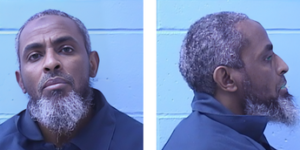
Police Officer Turned Robber Terrorises Residents in Bondo

Residents of Bondo town in Siaya County are reeling in shock following the arrest of a police officer linked to a series of violent robberies that have unsettled the region for weeks. The suspect, identified as Police Constable Mark Owino, was arrested on the evening of Friday, February 7, 2026, at Holo Police Station after investigators gathered what they described as compelling evidence connecting him to armed robbery incidents within Bondo and its surrounding areas.
The arrest has sent ripples of disbelief through the community, where Owino was previously known as a law enforcement officer entrusted with protecting lives and property. Instead, authorities now believe he may have been using his position, training, and access to weapons to orchestrate or directly participate in criminal activities that left traders traumatized and residents living in fear.
Arrest Following Weeks of Investigations
According to police sources, Owino was arrested at around 7:40 p.m. after weeks of discreet investigations led by detectives from the Directorate of Criminal Investigations (DCI). The investigations were launched following a spike in violent robberies reported across Bondo, with several incidents bearing striking similarities in execution and timing.
“The suspect was apprehended after investigators established strong links between him and a robbery with violence reported earlier this month,” a senior police officer involved in the probe said, speaking on condition of anonymity due to the sensitivity of the case.
Owino was immediately taken into custody, where he is currently being held as detectives continue to piece together the full extent of his alleged involvement in the crimes.
Robbery at Ajigo Trading Centre
The arrest is primarily linked to a robbery with violence that occurred on February 4, 2026, at Ajigo Trading Centre, a bustling commercial hub in the region. On that night, traders were preparing to close their businesses when armed suspects struck, targeting a local trader in what police describe as a well-coordinated attack.
CCTV footage obtained from a nearby business premises shows two armed men confronting the trader. The suspects appear confident and calculated, threatening the victim before forcefully taking cash and other valuables. Moments later, the footage captures the suspects fleeing the scene on a motorcycle, disappearing into the darkness as terrified onlookers watched helplessly.
The incident sparked outrage among residents, many of whom accused criminals of becoming increasingly bold and organized.
CCTV Breakthrough
Investigators say the CCTV footage played a critical role in breaking the case. After analyzing the recordings frame by frame, detectives reportedly identified physical features, movement patterns, and behavioral traits that raised suspicion about Owino’s involvement.
Further intelligence gathered from witnesses, mobile phone data, and internal police records reportedly strengthened the case against the officer. Sources indicate that Owino may have exploited his knowledge of police patrol routines and response times to evade arrest during earlier incidents.
“This was not a random criminal,” a detective familiar with the investigation said. “The suspect appeared to have insider knowledge, which is what raised red flags.”
Community in Shock
News of Owino’s arrest has left Bondo residents stunned, with many expressing anger, betrayal, and fear.
“It is very disturbing,” said a trader at Ajigo Trading Centre who requested anonymity for security reasons. “If a police officer is the one robbing us, then who are we supposed to trust?”
Others fear that more officers could be involved or that criminals are infiltrating security agencies. Community leaders have called for thorough investigations and accountability, urging authorities to restore public confidence in law enforcement.
“We want justice, not cover-ups,” said a local elder. “If he is guilty, let the law take its course.”
Identification Parade and Court Appearance
Police have confirmed that Owino will participate in an identification parade as part of ongoing investigations. Witnesses from the Ajigo robbery and other related incidents are expected to identify suspects believed to have taken part in the attacks.
The officer is scheduled to be arraigned at the Bondo Law Courts on February 9, 2026, where he will face charges related to robbery with violence. Prosecutors are expected to request more time to complete investigations, as detectives pursue possible accomplices and review unsolved robbery cases in the region.
Legal experts note that robbery with violence is a serious offense under Kenyan law, carrying severe penalties if one is convicted.
Police Service Responds
The National Police Service has condemned the alleged actions, emphasizing that the arrest demonstrates the institution’s commitment to upholding the rule of law, even when suspects are officers.
“No one is above the law,” said a police spokesperson. “Any officer found engaging in criminal activities will face the full force of the law.”
The spokesperson added that internal disciplinary processes would be initiated alongside criminal proceedings, and that the service would cooperate fully with investigators.
Broader Security Concerns
The case has reignited debate about police accountability, vetting processes, and mental wellness within the security services. Analysts argue that economic pressures, stress, and inadequate oversight may contribute to cases where officers turn to crime, though they stress that such actions cannot be justified.
Human rights groups have called for transparent investigations and urged authorities to ensure victims receive justice and support.
“This case should be a wake-up call,” said a representative from a local civil society organization. “We need stronger oversight mechanisms to prevent abuse of power.”
Residents Demand Justice
As Owino remains in custody, residents of Bondo hope the arrest marks the beginning of an end to the wave of violent robberies that has disrupted their livelihoods. Many traders have been closing shops earlier than usual, while others have invested in additional security measures.
For now, the community waits anxiously for the outcome of the court proceedings, hoping that justice will be served and that trust in law enforcement can gradually be rebuilt.
“This has shaken us deeply,” said one resident. “But we believe the truth will come out