Bulldozers at Midnight, Silence at Dawn: A Regime’s War on Its Own People
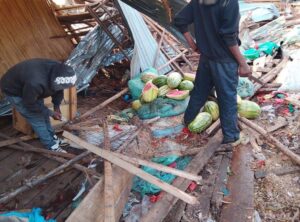
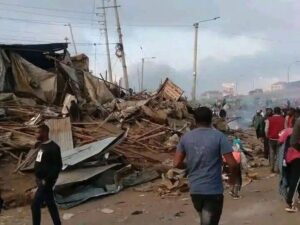
HENRY MASINDE February 19, 2026 0The events that unfolded in Githurai and Isiolo expose a disturbing portrait of a government whose priorities have become dangerously inverted. Under the cover of darkness, hundreds of police officers were deployed to Githurai—not to protect life, not to stop crime, but to demolish the property and livelihoods of small-scale traders. This operation, carried out in the dead of night, was not only senseless but profoundly inhuman. It terrorized innocent citizens whose only “crime” is struggling to survive in an economy already battered by poor policy, rising costs, and chronic unemployment.
The brutality of these demolitions goes beyond the physical destruction of stalls and goods. It strikes at human dignity. Traders were treated as criminals, their sweat and investment reduced to rubble without warning, dialogue, or compassion. Such actions reveal a regime that has lost touch with the moral foundations of leadership—justice, empathy, and respect for the people it claims to govern. When the state unleashes force against the weakest members of society, it signals not strength, but fear and moral bankruptcy.
This crackdown also lays bare a deeper disconnect between the ruling elite and the lived realities of ordinary citizens. While leaders speak casually of economic recovery and resilience, the common mwananchi is suffocating under a mutilated economy—high taxes, shrinking opportunities, and diminishing hope. To criminalize citizens within this context is a new low, especially when those issuing orders remain insulated in comfort, abundance, and privilege. The gulf between policy-makers and the people has grown so wide that suffering is no longer seen, only managed—or ignored.
Equally troubling is the posture of the security leadership, which claims to understand the plight of small and medium enterprises while presiding over their destruction. Threats are readily directed at opposition leaders, yet compassion is absent when citizens cry out in pain. The indifference of those in power is palpable. Their statements ring hollow when contrasted with their actions. Leadership is not measured by speeches or uniforms, but by whose lives are protected when it matters most.
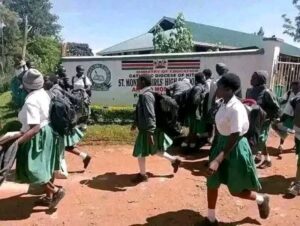
The most painful irony of the Githurai demolitions lies in what was happening elsewhere at the very same hour. In Isiolo, a tragedy was unfolding that demanded urgent and decisive state intervention. Mr. Gatobu, a deputy principal and a teacher of Physics and Mathematics at Leparua Secondary School, was brutally attacked, stabbed repeatedly, and butchered by bandits on February 18, 2026. This was not an isolated incident. The same bandits later raided a police station, wreaked havoc across the town, stole cattle, and killed Kenya Police Reservists and local residents alike.
Yet while Isiolo bled, there was silence from the regime. No rapid deployment of hundreds of officers. No midnight urgency. No dramatic show of state power. Instead, that overwhelming force was reserved for Mama Mboga in Githurai—women and men selling vegetables, fruits, and basic goods to feed their families. This contrast is as revealing as it is shameful. It raises a haunting question: what determines urgency for those in power? Is it the protection of life, or the suppression of the poor?
Such misplaced priorities underscore a blatant disregard for human life and dignity. When bandits roam freely, murdering educators and terrorizing communities, but traders face the full might of the state, something is fundamentally broken. Security is not about intimidation; it is about protection. Governance is not about control; it is about service. By failing on both fronts, the regime exposes its inability—or unwillingness—to uphold the social contract.
To the people of Githurai and Isiolo, solidarity is not just a slogan; it is a moral duty. Your pain is real, your anger justified, and your rights non-negotiable. Kenya belongs to all its citizens, not to a privileged few wielding power without accountability. No government has the authority to trample constitutional rights or to decide whose lives matter and whose do not.
History teaches us that regimes which rule through fear and force eventually crumble under the weight of their own cruelty. Liberation is not merely a political moment; it is the restoration of dignity, justice, and humanity. Until then, the voices of the oppressed must remain loud, united, and unafraid—because silence, as these events show, only emboldens injustice.